

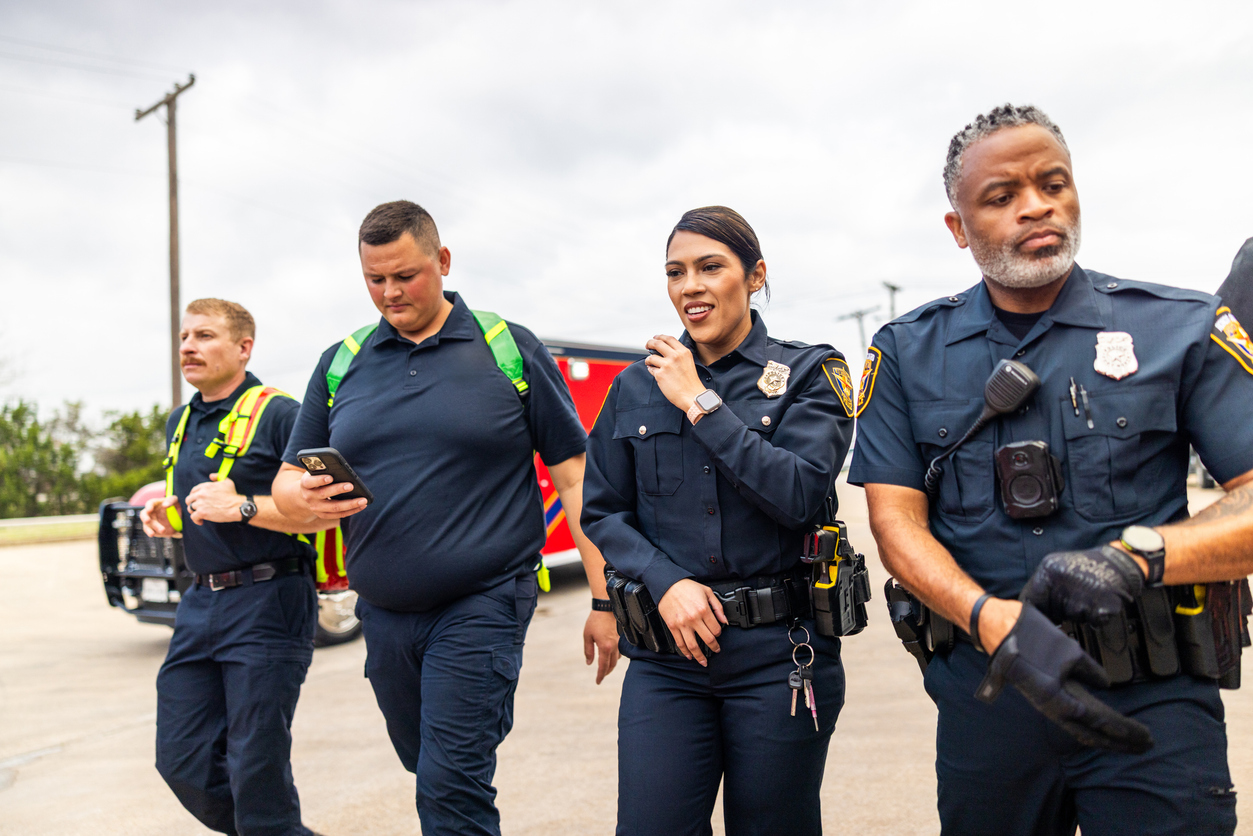
What liability coverage does a fire department actually need when it agrees to provide standby coverage at a concert, festival, or large public gathering? That question comes up more often once the summer festival season gets underway. It usually starts with an event organizer or a neighboring municipality asking a department to station personnel and apparatus somewhere outside their normal jurisdiction. It’s also one of the more common gaps firefighter insurance services need to address, and it’s easy to overlook because it doesn’t look like an emergency response in the traditional sense.
When Standby Coverage Becomes a Liability Question
Responding to an active emergency and being stationed at an event under a pre-arranged standby agreement are two different exposures, even though the same personnel and apparatus are involved. A department that responds to a fire operates under its own authority and its own protocols. A department providing standby coverage at a concert, festival, parade, or sporting event is often operating under someone else’s terms, sometimes informal ones, in a location outside its usual coverage area.
Guidance from the Federal Emergency Management Agency’s National Incident Management System notes that mutual aid agreements, including standby arrangements, need documented terms established before an incident, not during one. That guidance covers who provides resources, what those resources are, and how liability and compensation are handled. A verbal understanding with an event organizer doesn’t answer those questions, and the gap appears when something goes wrong.
Large public gatherings raise the stakes for exactly this reason. A festival with an expected crowd of several thousand people carries a different risk profile than a routine mutual aid call between two neighboring departments, and the pre-season conversation should reflect that difference.
What a Firefighter Insurance Services Review Should Cover
Before event season gets underway, agents should walk clients through a short set of questions rather than assuming the standing general liability policy has it covered:
- Is the standby agreement in writing? A written agreement should specify who is responsible if a bystander or attendee is injured and whether that responsibility shifts if the event organizer’s own security or medical staff was also on scene.
- Does the agreement name who assumes liability for injuries or property damage? Standby arrangements frequently leave this point unaddressed, especially when the request comes in close to the event date.
- Does coverage extend outside the department’s home district? A general liability policy written around a specific service area may not automatically extend to an out-of-district assignment.
Clients will raise scenarios that don’t have obvious answers without a documented agreement. What if someone is injured and the department was on standby, not actively responding? Do firefighter insurance services extend if the department is operating under another jurisdiction’s request? Both questions point back to the same fix: Get the terms in writing before the event, not after.
Research on mutual aid arrangements has long identified this recurring concern. FEMA found that verbal, undocumented mutual aid arrangements leave departments, particularly volunteer departments, without clear answers on liability and reimbursement when an incident occurs. The same pattern applies to standby coverage at public events, where the arrangement is often informal by default.
Coordinating General Liability and Excess Liability for High-Attendance Events
A general liability policy has limits, and a large public gathering can push a claim past those limits faster than a routine incident would. FirePlus’s general liability form for fire departments already includes a special events coverage extension, which addresses the standby scenario directly. But for departments that provide standby coverage regularly, particularly at high-attendance events, the general liability limits alone may not be sufficient if a serious injury or a significant property damage claim results.
Excess liability coverage responds once the underlying general liability limits are exhausted, providing an added layer of protection for the kind of catastrophic claim that a large crowd and an informal standby arrangement can produce together. Agents working with departments that regularly staff festivals, concerts, or other high-attendance events should review excess liability limits alongside general liability rather than treating the two as separate conversations.
Making Event Coverage Part of the Annual Liability Review
Standby and mutual aid coverage at public events is a distinct exposure from a department’s day-to-day operations, and it’s easy to miss if it isn’t a standard part of the annual liability review. The exposure doesn’t come from responding to an emergency. It comes from showing up prepared for one that may never happen, under terms that were never fully documented.
Ask fire department clients whether they’re providing standby coverage this summer. If the answer is yes, confirm the agreement is in writing, check where liability sits, and make sure the department’s general liability and excess liability coverage reflect the scope of what they’ve agreed to do. Get in touch with us to review how FirePlus’ general liability coverage addresses standby and event-based exposure for fire department clients.
FAQ on Public Event Risks
Does general liability cover a fire department providing standby coverage at a public event?
It depends on the policy. FirePlus’s general liability form includes a special events coverage extension tailored to this scenario, but departments should confirm that their specific policy addresses standby assignments, especially those outside their home district.
Who is liable if someone is injured at an event where a fire department is on standby?
Liability depends on the terms of the standby agreement. Without a written agreement specifying who assumes responsibility, the answer can be unclear, which is why FEMA’s mutual aid guidance recommends documenting terms before an event rather than during one.
Do fire departments need a written agreement to provide event coverage outside their district?
A written agreement isn’t always legally required, but it’s the clearest way to establish who is responsible for injuries, property damage, and reimbursement. Departments providing standby coverage without taking on liability uncertainty that a documented agreement would resolve.
About Provident FirePlus
Founded in 1902, our rich history includes the creation of custom firefighter insurance services in 1928. Today, Provident FirePlus continues to be a pioneer in developing insurance programs for firefighters, EMS providers, municipal entities, and law enforcement. In addition, we provide Special Risks insurance for various volunteer and nonprofit groups. Give us a call today at (412) 963-1200 to speak with one of our representatives.