

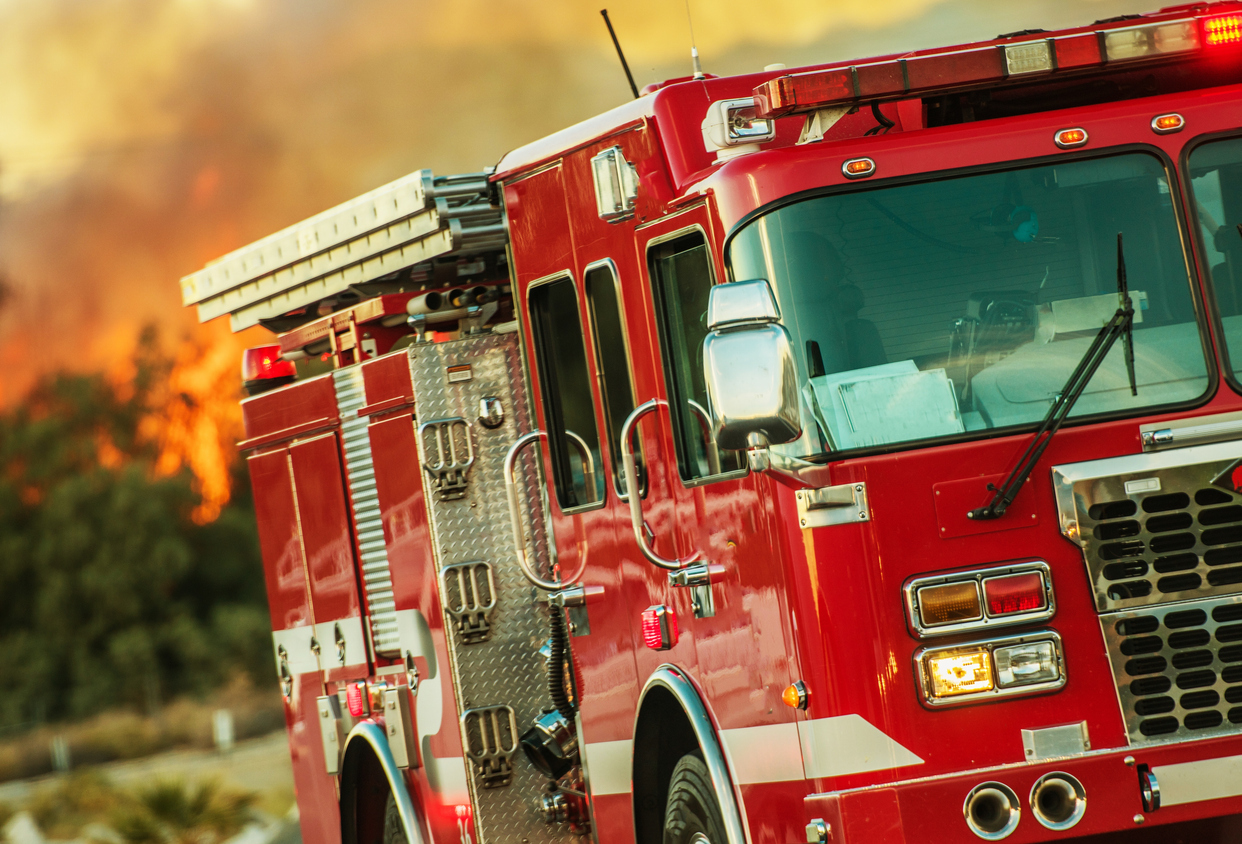
Wildfire season sends engines, water tenders, and support vehicles outside their home district, sometimes for days at a stretch, as departments answer mutual aid calls across county and state lines. Automobile exposure in wildfire season shifts in ways an annual review might miss, which is exactly why firefighters insurance conversations between agents and fire department clients should happen before deployment season peaks. What gaps in commercial auto coverage should get checked before vehicles head out on a mutual aid assignment? Here’s where to start.
Where Mutual Aid Changes Auto Exposure
A truck responding within its own district covers familiar roads and short distances. A truck deployed on mutual aid covers unfamiliar routes, longer drive times, and often multiple days on the road before it even reaches the incident. The U.S. Fire Administration’s Firefighter Fatalities in the United States report lists vehicle crashes as a recurring, separately identified cause of on-duty fatalities year over year.
Deployments can also involve numerous vehicles. An engine, a water tender, and a support vehicle often move together, meaning a single deployment can carry multiple auto exposures.
What Firefighters Insurance Should Confirm Pre-Deployment Season
Before wildfire season, take a closer look at a fire department’s commercial auto policy.
- Vehicle listings: Confirm every vehicle scheduled for mutual aid response is properly listed on the policy. Provident FirePlus commercial auto policies include a fleet automatic provision, which extends coverage to newly acquired vehicles without waiting for a policy amendment, since departments do not always update their fleet roster the moment a new vehicle goes into service.
- Coverage territory: Out-of-state deployments raise a question: Does the policy respond the same way once apparatus crosses a state line, or does coverage narrow outside the home territory?
- Commandeered vehicles: Mutual aid can put a department’s vehicle under another jurisdiction’s operational control for the duration of a deployment. A provision that treats a commandeered auto as a covered auto, like the one offered by Provident FirePlus, keeps that vehicle protected even while it is operating outside the owning department’s direct command.
- Relief and reserve apparatus: When primary units deploy, older or backup vehicles often step in at the home station. A temporary vehicle substitute provision extends the same coverage to a substitute vehicle while the primary unit is away.
The Agent’s Role Before the Call Comes In
Renewal cycles happen on a fixed schedule, not around wildfire season. If the coverage review waits for renewal, it happens well after apparatus have already been deployed and the exposure has already played out.
The Federal Emergency Management Agency’s National Incident Management System Guideline for Mutual Aid describes how jurisdictions set up formal agreements and operational plans for sharing personnel, apparatus, and equipment across jurisdictional lines. Wildfire mutual aid runs through this structured system. Agents should ask in advance what happens if a deployed vehicle is damaged in a state where the department does not otherwise operate.
Keeping Apparatus Covered Wherever It’s Deployed
Wildfire season moves apparatus farther from home than almost any other point in the year, and firefighters insurance coverage should be reviewed with that in mind. Agents who walk clients through vehicle listings, coverage territory, and commandeered vehicle status before deployment season peaks give departments one less thing to worry about once trucks are already on the road. Get in touch with us to talk through coverage ahead of the season.
Firefighters Insurance FAQ
Does commercial auto insurance cover fire apparatus deployed to another state under mutual aid?
Coverage depends on the policy’s territory terms and how it treats vehicles operating under another jurisdiction’s control. Some policies address this directly through a commandeered auto provision, while others require the territory to be confirmed in advance.
What happens to auto coverage for a reserve engine used while the primary unit is deployed?
A temporary vehicle substitute provision is designed for this situation, extending coverage to the reserve vehicle stepping in at the home station. Confirming that this provision is in place and that it applies to the same limits as the primary unit closes a gap that departments sometimes overlook.
Should fire departments update their auto policy every wildfire season, or only at renewal?
A seasonal check-in ahead of wildfire season, separate from the annual renewal, gives departments a chance to confirm vehicle listings and coverage territory before deployment patterns shift, rather than waiting months for the next scheduled review.
About Provident FirePlus
Founded in 1902, our rich history involves the creation of custom firefighter insurance benefits in 1928. Today, Provident FirePlus continues to be a pioneer in developing insurance programs for firefighters, EMS providers, municipal entities, and law enforcement. In addition, we provide Special Risks insurance for various volunteer and nonprofit groups. Give us a call today at (412) 963-1200 to speak with one of our representatives.