

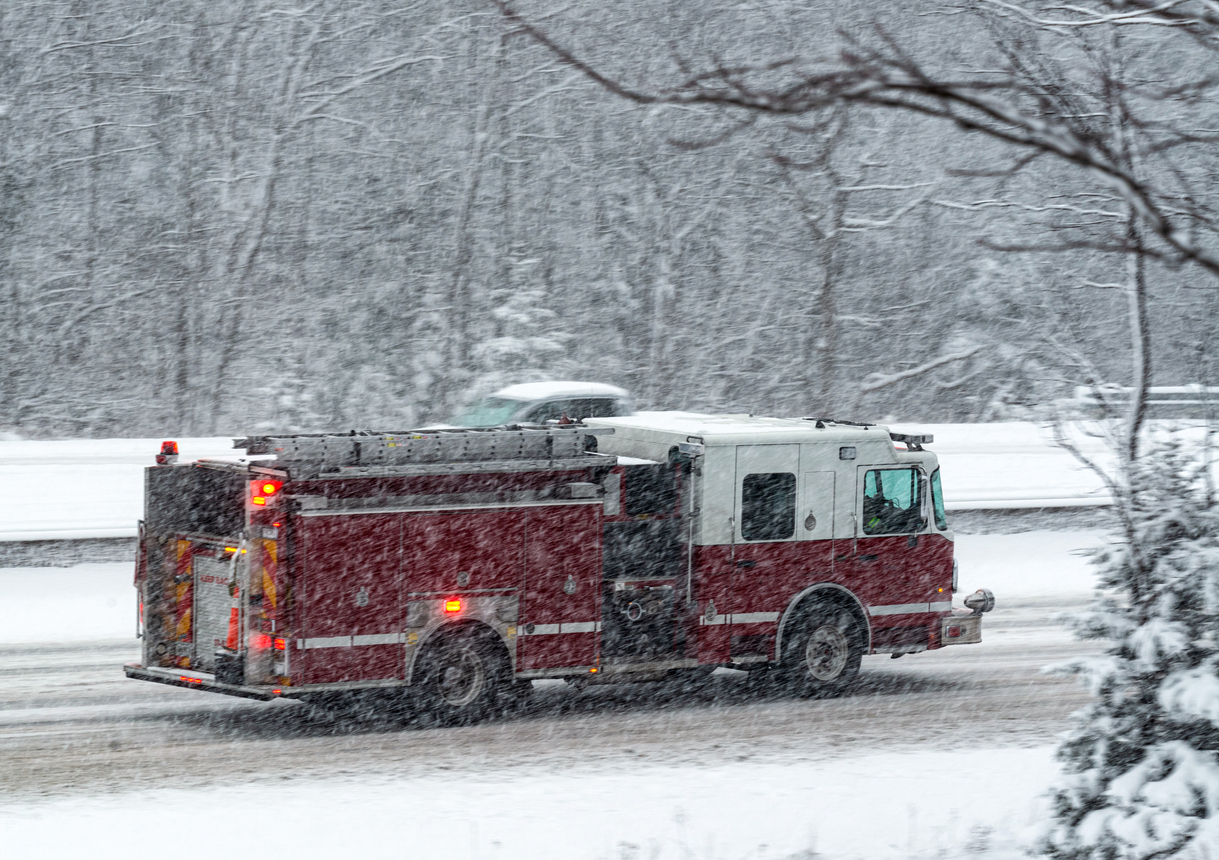
After the first hard freeze of the season, crew members at a volunteer fire department engage the engine’s pump during a routine check, hear a metallic sound, and find water leaking from the pump body. Their next call is to their insurance agent. For agents who handle insurance for volunteer firefighters, the first question is about the cause: Did the freeze damage the pump, or did cold weather expose wear, a maintenance gap, or a preexisting defect? The answer shapes which policy provisions come into play.
Winter puts extra strain on engines, hoses, and other gear, so departments may blame freezing for any failure that follows a cold night. An agent who digs deeper to ask what the department saw, when the equipment was last serviced, and how it was stored can point the client to the right provisions and set expectations for the claim.
What Can Damage a Fire Pump in Cold Weather?
The department’s report most likely describes a malfunction, not a cause. Cold weather guidance from fire pump manufacturer Waterous shows why a malfunction and its cause can differ.
Waterous recommends draining all water from a pump, its lines, and its accessories when the pump is exposed to freezing temperatures. A pump left partially full can freeze, and according to Waterous, the ice first damages the impeller shrouds and vanes. No one can see that damage until someone disassembles the pump. Vibration, metallic sounds, water leaking from the pump body or its attached components, and a failed annual pump service test can all signal a problem.
The metallic sound and the leak in our example suggest possible freeze damage. However, the department won’t know what happened inside the pump until a technician takes it apart.
Draining a pump creates a separate risk. Waterous notes that a pump left dry for extended periods without operation can accumulate calcium and rust deposits. Once crews engage the pump and circulate water, the deposits can break loose, plug the relief valve strainer screen, score discharge valve seats, and damage priming valves and other parts with O-rings or seals. In that case, the damage appears during winter, but buildup over time causes it.
How Does the Cause of Failure Shape the Coverage Question?
Each possible cause leads to a different part of the policy. Freeze damage prompts a review of how the policy addresses freezing. Deposit buildup triggers provisions for wear and tear, deterioration, or mechanical breakdown. Neither cause guarantees or rules out coverage. The applicable causes-of-loss provisions, exclusions, exceptions, and conditions decide the outcome, and the insurer applies them to the technician’s findings.
Until those findings come in, avoid telling the department whether the loss is covered. A premature answer in either direction can mislead the client before the insurer has reviewed the claim.
What To Check When a Department Reports Winter Equipment Damage
With the cause still open, focus on the information the insurer will need. Three areas cover it:
- Covered equipment: Confirm the damaged item qualifies as insured property under the policy’s definitions, schedules, or blanket provisions. Provident FirePlus offers coverage for losses to fire apparatus, turnout gear, radios, and other portable and mobile emergency equipment. The policy’s terms still determine whether a specific item, such as a pump mounted on an engine, qualifies.
- Cause of loss and policy terms: Ask how cold it got, whether crews drained the pump or kept it wet, and whether the station stayed heated. Each answer connects to a cause. A wet pump that sits without circulating water can freeze, a pump left dry and idle can collect deposits, and a station heating failure can expose the apparatus inside to freezing temperatures. Compare the answers and the technician’s findings with the policy’s language on freezing, mechanical breakdown, wear and tear, deterioration, and resulting damage.
- Supporting documentation: Encourage the department to preserve equipment identification details, photos of visible damage, maintenance records, annual pump service test results, and any repair assessment. Maintenance records can show how crews drained the pump and operated it. Service test results can show whether the pump passed before the freeze. Together, the records help the insurer connect the damage to a cause.
Gathering records and waiting for a teardown both take time, but neither should delay the claim. Check the policy’s notice requirements, and encourage the department to report the potential loss as soon as it discovers the damage. The insurer can investigate the cause after it receives notice. A department that waits for a technician’s diagnosis before calling may miss a notice deadline, and late notice can complicate or jeopardize the claim, depending on the policy’s conditions.
Clarify the Cause Without Delaying the Claim
For agents who handle insurance for volunteer firefighters, a winter equipment loss calls for two steps. First, help the department report the damage promptly. Then help it gather the facts that let the insurer connect the malfunction to a cause and apply the policy.
If a client’s winter equipment loss raises questions about portable and mobile equipment coverage or other insurance for volunteer firefighters, we can help.
About Provident FirePlus
Founded in 1902, our rich history involves the creation of custom firefighter insurance benefits in 1928. Today, Provident FirePlus continues to be a pioneer in developing insurance programs for firefighters, EMS providers, municipal entities, and law enforcement. In addition, we provide Special Risks insurance for various volunteer and nonprofit groups. Give us a call today at (412) 963-1200 to speak with one of our representatives.