

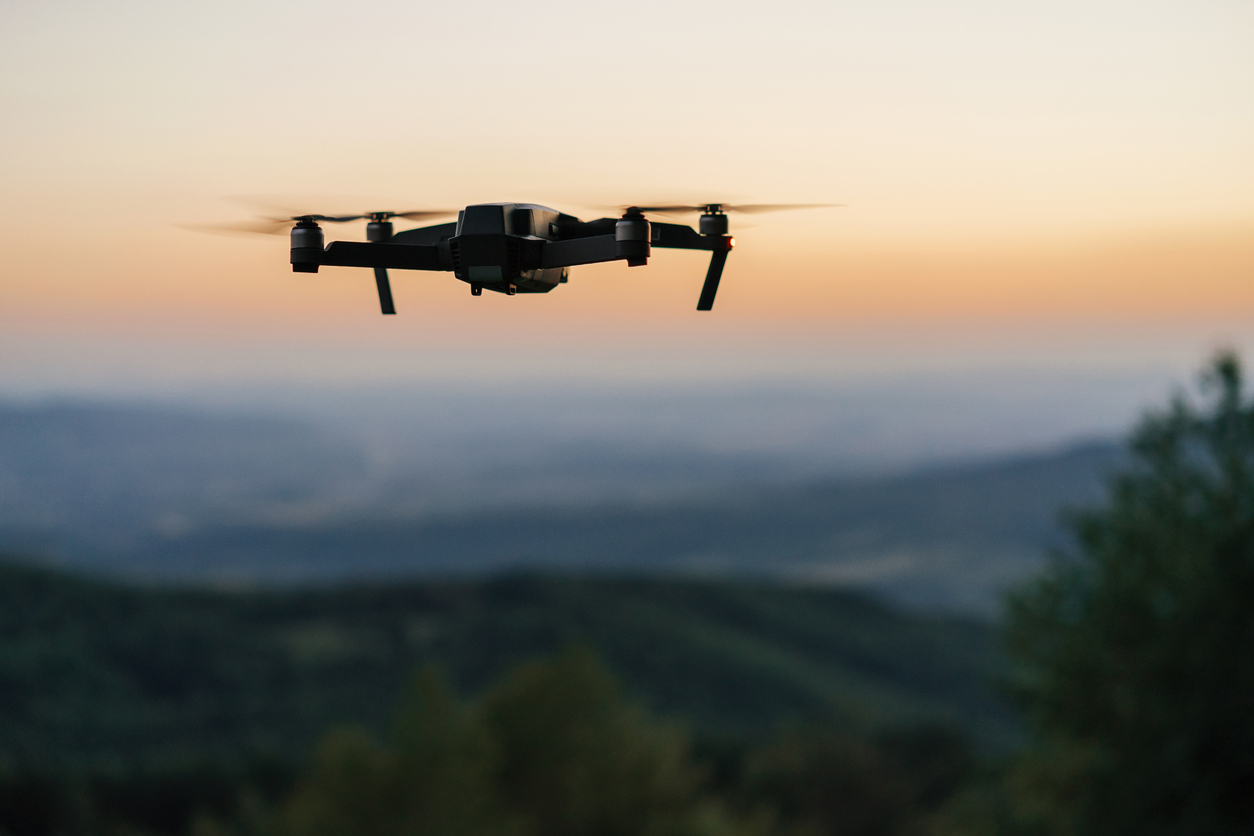
Drones and thermal imaging tools have moved from a specialty purchase to standard equipment in many departments, used for search and rescue, scene assessment, and hotspot detection. Does a fire department’s existing equipment coverage extend to this gear, or was the policy written before any of it was added to the truck?
Fire department insurance companies writing portable and mobile equipment coverage today may have priced those policies before drones and thermal cameras became routine tools. Agents who catch the gap at renewal save their clients from discovering it after a loss.
How Departments Are Using Drones and Thermal Equipment Today
Fire and public safety agencies have adopted drones over the past decade to gain an aerial view of a scene, reach areas that are unsafe or hard to access on foot, and carry sensors that detect chemical, biological, radiological, nuclear, and explosive threats without putting a person in the hazard zone, according to guidance the U.S. Department of Homeland Security released through its National Urban Security Technology Laboratory. That guidance also points to search-and-rescue operations, post-incident damage assessments, and nighttime operations as scenarios departments are actively testing this equipment against.
This kind of adoption usually happens at the operational level. A chief approves the purchase, often through grant funding, and a team gets trained, all without starting a conversation about insurance.
The industry has caught up to the trend on the standards front. NFPA 2400I’s Standard for Small Unmanned Aircraft Systems (sUAS) program now sets minimum requirements for how public safety agencies operate, deploy, and maintain small unmanned aircraft systems. A standard built specifically around this technology is a signal that it has matured enough to warrant its own coverage conversation, not a footnote in a general equipment review.
Where Fire Department Insurance Companies See Coverage Gaps
A handful of questions arise when an agent looks closely at how a department’s drone program fits within its existing policy.
- Itemization: Confirm that drones, controllers, and thermal cameras are scheduled individually on the portable and mobile equipment policy rather than assumed to fall under general property coverage.
- Valuation: Check whether the policy reflects replacement cost or actual cash value. Drone and thermal camera technology changes quickly, and an outdated valuation can leave a department underinsured for equipment it bought only a year or two ago.
- Location of use: Ask whether coverage travels with the equipment during mutual aid deployments or off-site training, not just at the home station.
Questions Agents Should Ask at the Next Renewal
A short renewal checklist that includes new technology adoption catches what a standard review often misses. Ask whether the department has documented its sUAS program in line with NFPA 2400. That documentation supports a cleaner claims process if equipment is lost or damaged, and it gives the agent a concrete artifact to review rather than a verbal description of how the drone is used.
It is also worth raising the liability side of the conversation. A drone incident, whether it is a crash into private property or a privacy complaint from a resident, can create exposure beyond the equipment itself. Portable and mobile equipment coverage rarely stands alone. Agents may suggest general liability exposure tied to the same equipment.
Keeping Coverage Current as Tools Evolve
Departments are adding new technology faster than most policies get reviewed, and portable and mobile equipment coverage needs to keep pace with what is actually in the truck or the drone bag. Checking on new equipment adoption in every renewal conversation keeps that gap from turning into a claims problem. Get in touch with us to talk through how a department’s current equipment lines up with its policy.
Insuring Drones FAQ
Are drones covered under a fire department’s general equipment policy?
Not automatically. Drones and related gear typically need to be scheduled on a portable and mobile equipment policy rather than assumed to fall under a department’s broader property coverage.
Does thermal imaging equipment need to be scheduled separately on a policy?
In most cases, yes. Thermal cameras purchased alongside drones or as standalone tools should be itemized so their value and replacement cost are documented individually.
What should a fire department document about its drone program for insurance purposes?
A department should keep records of its sUAS program consistent with NFPA 2400, including training, maintenance, and deployment procedures. That documentation supports the insurance conversation and can streamline a claim if equipment is damaged or lost.
About Provident FirePlus
Founded in 1902, our rich history involves the creation of custom firefighter insurance benefits in 1928. Today, Provident FirePlus continues to be a pioneer in developing insurance programs for firefighters, EMS providers, municipal entities, and law enforcement. In addition, we provide Special Risks insurance for various volunteer and nonprofit groups. Give us a call today at (412) 963-1200 to speak with one of our representatives.